
How Much Does It Cost to Install Downlights in Brighton? A Local Electrician’s Guide
Lighting is the single change that transforms how a room feels more than almost anything else you can do to it. A kitchen with a single fluorescent tube feels completely different to the same kitchen with recessed downlights over the worktops, pendants over the island, and under-cabinet strips illuminating the splashback. A living room with one central pendant feels flat and uninviting compared to the same room with dimmable downlights, table lamps on switched sockets, and accent lighting that creates depth and warmth. The space hasn’t changed — the light has, and it makes the room feel like a different place.
Despite this, lighting is one of the most commonly overlooked improvements in Brighton and Hove homes. People spend thousands on kitchens, bathrooms, and decoration but leave the original lighting untouched — then wonder why the finished room doesn’t feel quite right. This guide covers what different types of lighting installation cost across Brighton, what’s involved in the work, and how to get the most from your investment.
Recessed Downlights
Recessed downlights are the most popular lighting upgrade across Brighton and Hove and the one that makes the most immediate visual impact. They sit flush with the ceiling, replacing bulky pendant fittings with a clean, modern appearance that works in every room.
A set of four to six downlights in a single room — a kitchen, living room, or bedroom — typically costs between £300 and £550 including the fittings, cabling, switch, and installation. The exact price depends on the number of fittings, whether a new lighting circuit is needed from the consumer unit, and whether the installation includes a dimmer switch.
A full house downlight installation covering four to six rooms typically costs between £1,200 and £2,800. The per-room cost reduces when multiple rooms are done at once because the electrician runs circuits more efficiently and the consumer unit work happens once rather than repeatedly.
The installation involves cutting apertures in the ceiling at the correct spacing, running cabling from a lighting circuit at the consumer unit, and connecting each fitting. We use fire-rated, insulation-compatible downlights as standard — this matters because the fitting sits inside the ceiling void where fire protection and thermal performance are critical. LED fittings are the default specification, lasting significantly longer than halogen, using a fraction of the energy, and producing less heat in the ceiling space.
The spacing and positioning of downlights makes more difference to the finished result than the fittings themselves. Correctly spaced downlights provide even illumination without dark spots or harsh pools of light directly beneath each fitting. Poorly spaced downlights create a room that feels like a runway. We plan the layout before installation, accounting for the room’s dimensions, furniture positioning, and how you actually use the space.
Kitchen Lighting
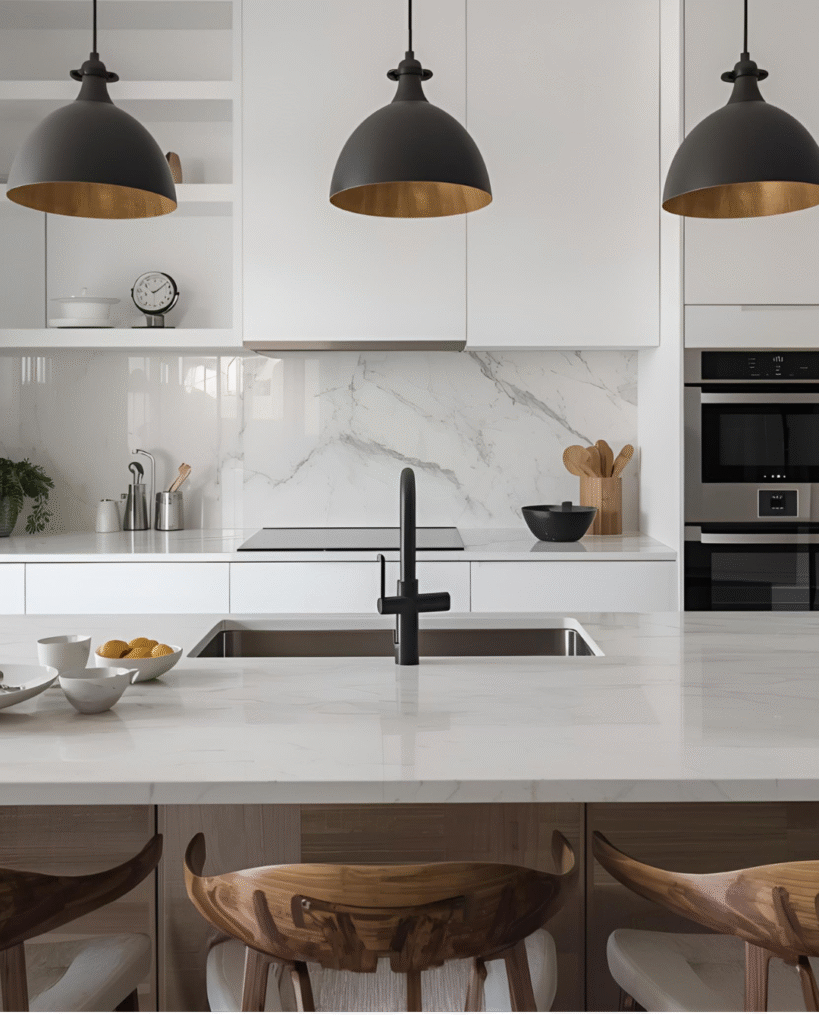
Kitchen lighting needs to work harder than any other room because the space serves multiple purposes throughout the day. Preparing food demands bright, shadow-free task lighting over the worktops. Eating at the table or island calls for warmer, lower lighting that creates atmosphere. Morning coffee needs enough light to function without the full brightness of cooking mode. A single central fitting can’t do all of this, which is why layered kitchen lighting makes such a difference.
A comprehensive kitchen lighting scheme across Brighton typically costs between £600 and £1,500 depending on the number of lighting types and the complexity of the installation. This typically includes recessed downlights for general illumination, under-cabinet LED strip lighting for worktop task lighting, pendant fittings over an island or breakfast bar, and potentially plinth lighting or in-cabinet accent lighting.
Each element installs on a separate circuit with its own switch or dimmer, giving you independent control over which lights are on and at what level. Cooking with the downlights at full brightness and the pendants off looks and feels completely different to eating with the downlights dimmed, the pendants on, and the under-cabinet strips casting a warm glow across the worktops.
Under-cabinet strip lighting is one of the most cost-effective kitchen improvements available — typically £150 to £350 for a full run of LED strips under the wall units. The installation is straightforward and the impact on food preparation is immediate because you’re illuminating the exact area where you work rather than relying on overhead light that casts shadows from your own body.
Bathroom Lighting
Bathroom lighting operates under specific electrical regulations that other rooms don’t face. The room is divided into zones based on proximity to water sources, and each zone requires fittings with minimum IP ratings to protect against moisture ingress. Zone 0 is inside the bath or shower. Zone 1 is directly above. Zone 2 extends 60 centimetres outward from the bath or shower. Outside zone 2, standard fittings can be used.
A bathroom lighting installation across Brighton typically costs between £250 and £600 depending on the number and type of fittings. Recessed downlights with appropriate IP ratings provide general illumination — typically three to four fittings for a standard family bathroom. LED mirror lighting delivers shadow-free illumination for shaving and makeup — far more effective than a single ceiling light that casts shadows downward across the face. Accent lighting around bath panels, niches, or vanity units adds warmth and a contemporary feel.
Every fitting must be rated correctly for its zone position. An electrician who understands bathroom zones installs fittings that are both safe and compliant. One who doesn’t risks installing standard fittings in zones that require IP-rated alternatives — which is both a safety hazard and a Building Regulations failure.
Outdoor and Garden Lighting
Outdoor lighting serves three distinct purposes — extending how you use your garden after dark, improving security around the property, and making paths, steps, and driveways safe to navigate in the evening. Brighton and Hove’s mild climate means gardens get used well into the autumn evenings, making outdoor lighting particularly worthwhile.
A basic outdoor lighting setup — a couple of PIR security lights on the front and rear of the property — typically costs between £150 and £350 installed. This covers the fittings, cabling, and connection to an appropriate circuit with RCD protection.
A more comprehensive garden lighting scheme including path lights, patio feature lighting, deck or fence lighting, and uplighting for planting or architectural features typically costs between £500 and £1,500 depending on the number of fittings and the extent of the cabling. Longer cable runs across larger gardens — common on some of the detached properties in Hove, Patcham, and Rottingdean — require armoured cable buried at the correct depth, which adds material and labour cost.
All outdoor lighting uses IP-rated weatherproof fittings designed for permanent exposure to the coastal Brighton climate. Salt air, wind-driven rain, and temperature fluctuations demand fittings that are genuinely weatherproof rather than merely splash-resistant.
Smart Lighting
Smart lighting systems allow you to control your lights from an app on your phone, by voice through Alexa or Google Assistant, or through automated schedules and scenes. The electrical installation is the same as standard lighting — the intelligence is in the fittings or the switches rather than the wiring.
Smart bulbs are the simplest entry point — replace existing bulbs with smart alternatives and control them through the manufacturer’s app. No electrical work needed, but each bulb costs £10 to £25 compared to £3 to £5 for a standard LED.
Smart switches replace your existing wall switches with WiFi-connected alternatives that control any bulb fitted to them. These cost £30 to £80 per switch plus installation, and offer a cleaner solution than smart bulbs because the control is at the switch rather than the fitting — meaning standard bulbs work normally and the smart functionality doesn’t disappear if someone replaces a bulb.
A full smart lighting installation across a Brighton property — covering all rooms with smart switches, dimming capability, and scene control — typically costs between £800 and £2,000 including switches, installation, and configuration.
What Affects the Cost?
The number of fittings is the most straightforward variable. More downlights, more under-cabinet strips, more outdoor fittings all add material and installation time.
Whether new circuits are needed affects the electrical work significantly. If your consumer unit has spare capacity for additional lighting circuits, connecting new fittings is relatively straightforward. If the board is full, a consumer unit upgrade may be needed to create capacity — adding £300 to £800 to the project.
Ceiling and wall construction influences installation time. Plasterboard ceilings with accessible void above are quick to cut and wire. Concrete ceilings, lath and plaster ceilings in Brighton’s older properties, and situations where access above is restricted take longer and cost more.
Dimmer specification varies in cost. A basic rotary dimmer costs £15 to £30. A quality trailing-edge dimmer designed specifically for LED fittings costs £30 to £60. Smart dimmers with app control cost £50 to £80. The dimmer type matters because cheap dimmers paired with LED fittings can cause flickering, buzzing, and inconsistent dimming performance.
Cable routing affects labour time. Running a new circuit from the consumer unit to a distant room involves routing cable through ceiling voids, walls, and potentially between floors. The distance and complexity of the route influence how long the installation takes.
Getting the Best Value
Plan your lighting around how you use each room rather than defaulting to downlights everywhere. A kitchen needs layered lighting. A living room benefits from dimmable downlights supplemented by table and floor lamps on switched sockets. A bedroom needs soft ambient lighting rather than bright overhead fittings. A bathroom needs zone-compliant fittings positioned for both general illumination and mirror-level task lighting.
Get a quote that specifies fitting types, positions, circuits, switching, and dimming so you know exactly what you’re getting. Ask your electrician to walk you through the proposed layout before installation — moving a downlight on paper costs nothing, while moving one after installation means repatching the ceiling.
If you’re considering a lighting upgrade at your Brighton and Hove property, get in touch for a free consultation. We’ll discuss how you use each room, recommend a scheme that works for your home, and provide a clear quote so you know exactly what’s involved.